Your Child's First Dental Visit: When and What to Expect
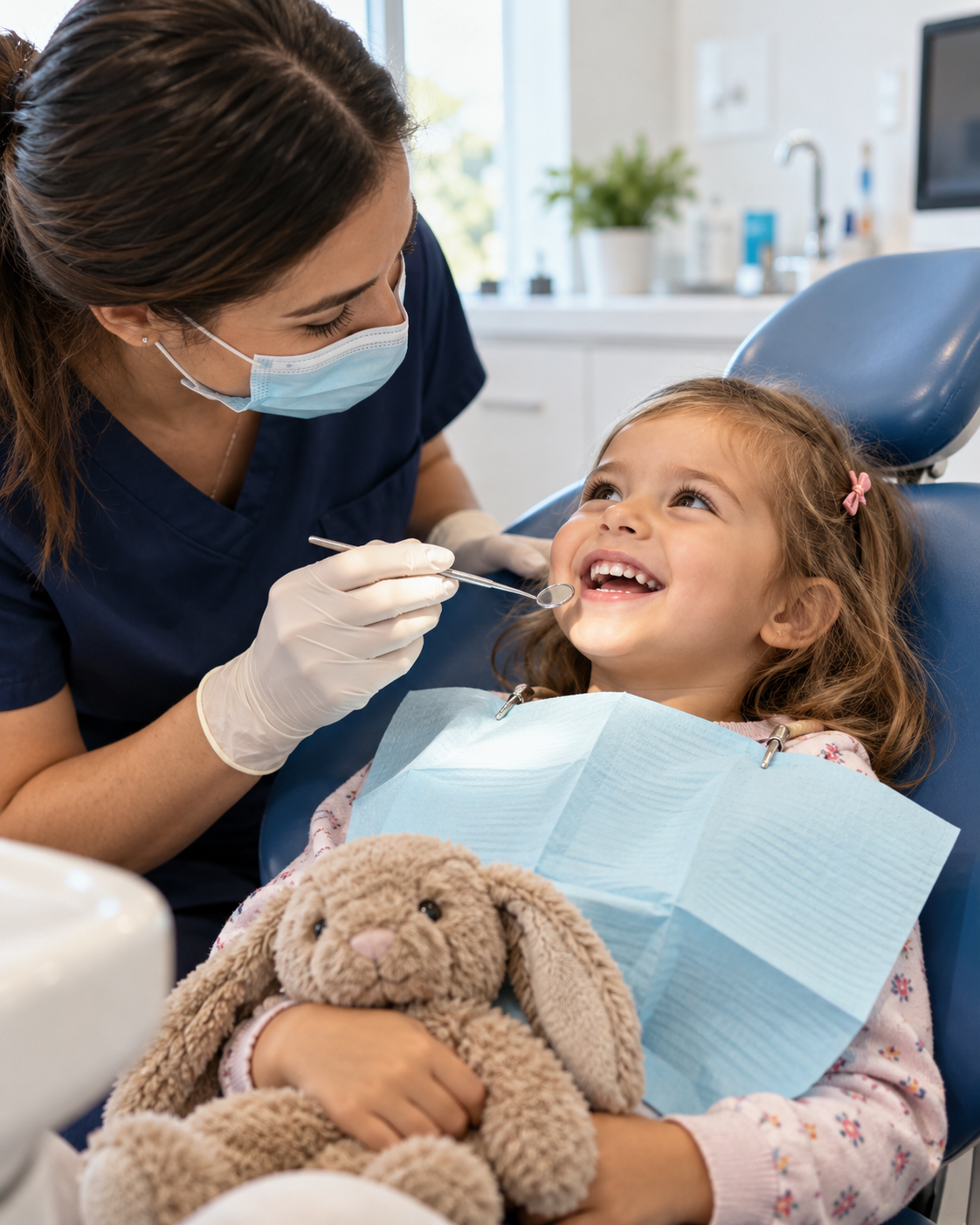
By Dr. Mohsen Alozaibi, Tiny Teeth Dental Center, Abu Dhabi
"Isn't it too early? They only have a few teeth." It's one of the questions I hear most from parents. The truth is that an early first visit is one of the simplest ways to protect your child's smile, and to make sure they grow up without a fear of the dentist.
When should the first visit be?
Children's dental organisations recommend a first visit by the first birthday, or within six months of the first tooth appearing, whichever comes first. Many families wait until there is a problem, but by then a child's first experience at the dentist can be a painful one. Starting early means the first visit is about checking, guiding and getting comfortable.
What happens at the first visit?
For babies and toddlers the visit is short, gentle and mostly conversation:
- A quick look at teeth and gums, often with your child sitting on your lap, knee to knee with the dentist.
- Checking for early signs of decay, such as white chalky spots near the gumline.
- Looking at habits like night feeding, bottles, pacifiers and thumb sucking.
- Showing you how to brush your child's teeth and how much toothpaste to use.
- Advice on food and drinks, including juice, milk at bedtime and snacks.
- Answering your questions. There is no such thing as a silly question.
Fluoride varnish may be suggested for some children to help strengthen enamel. Your dentist will explain if and why it is useful for your child.
How to prepare your child
- Pick a good time of day, when your child is usually rested and fed, not at nap time.
- Keep the language positive and simple. "The dentist will count your teeth" works better than "it won't hurt."
- Read a story or play "dentist" at home, counting teeth with a toothbrush.
- Stay calm yourself. Children pick up on their parents' feelings quickly.
- Bring a favourite toy or comfort item.
What if my child cries?
That's completely normal, especially for under-threes. Crying does not mean the visit failed. A gentle, unhurried approach and short, regular visits help children build trust over time.
How often after that?
Most children benefit from a check-up every six months, though your dentist may suggest a different schedule depending on your child's risk of cavities.
Questions about your child's teeth?
Every child is different — it is always better to ask than to worry.
This article is general information and does not replace an examination by a dentist or doctor.