Teething: What's Normal and How to Soothe Your Baby
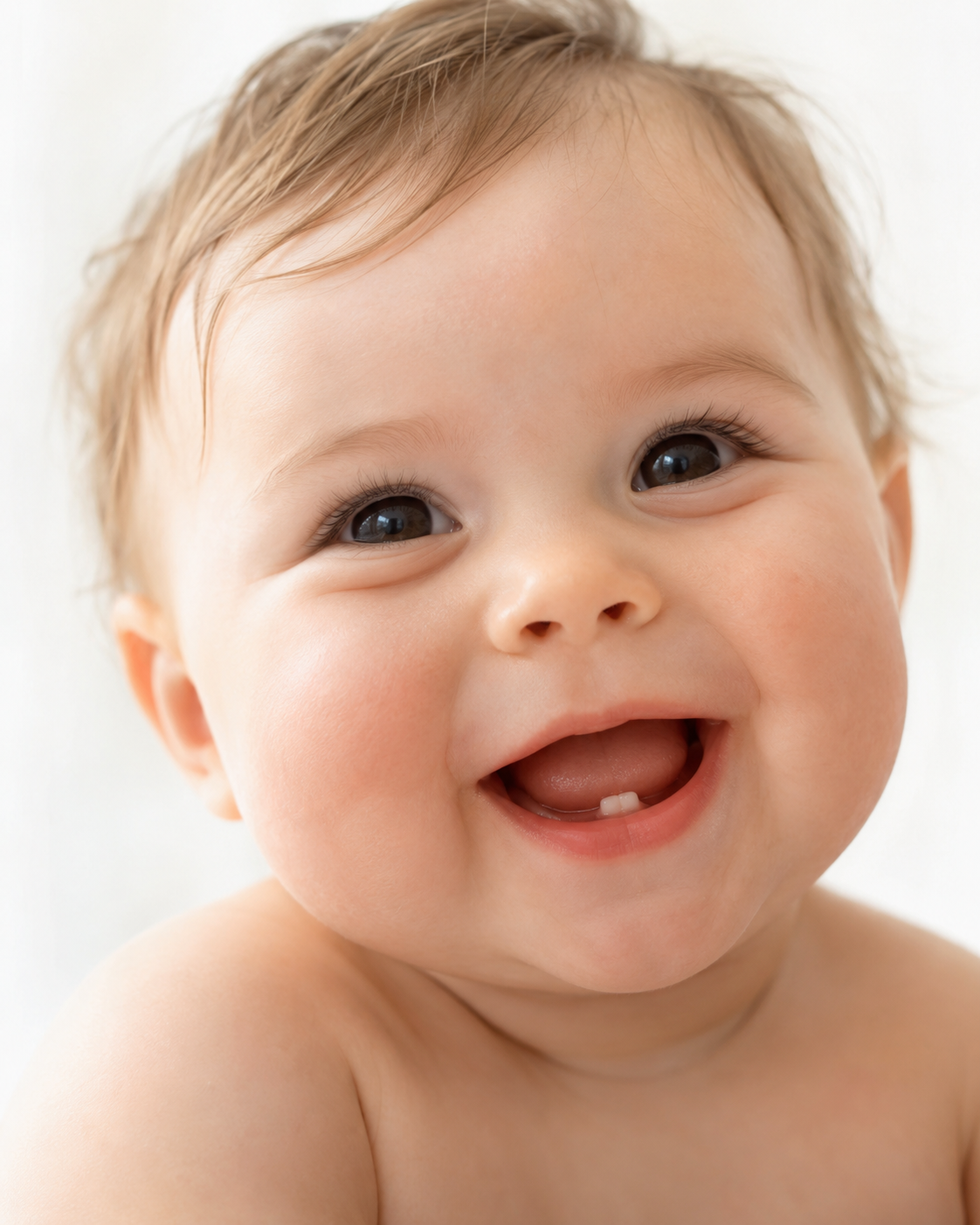
By Dr. Mohsen Alozaibi, Tiny Teeth Dental Center, Abu Dhabi
Few things test a parent's patience like a drooling, unsettled baby who just won't sleep. Teething is a normal stage of growth, but it raises a lot of questions. Here is what to expect and what genuinely helps.
When does teething start?
Most babies get their first tooth somewhere between 6 and 10 months, usually one of the lower front teeth. Some start earlier and some later, and both are usually normal. If your baby has no teeth at all by around 18 months, mention it at a dental check-up. By around age 3, most children have all 20 baby teeth.
Common signs of teething
- More drooling than usual
- Chewing on hands, toys or anything within reach
- Swollen or tender gums
- Fussiness and more night waking
- Rubbing the cheek or ear on the same side as the new tooth
What teething does not usually cause
Many parents are told that teething causes high fever, diarrhoea or a rash. A slightly raised temperature can happen, but a fever of 38°C or higher, diarrhoea, vomiting or a baby who seems unwell should be checked by your doctor. It is safer not to assume it is "just teeth."
What helps
- Clean finger massage: gently rub the gums with a clean finger for a minute or two.
- Chilled (not frozen) teething ring: cool from the fridge is soothing; frozen rings can be too hard on gums.
- Something safe to chew: a firm, age-appropriate teether, always with an adult watching.
- Wipe the drool: keep the chin dry to prevent a rash.
- Comfort and routine: extra cuddles and a calm bedtime routine go a long way.
If your baby is very uncomfortable, ask your doctor or pharmacist about the right dose of a pain reliever suitable for their age and weight.
What to avoid
- Teething necklaces and bracelets (amber or otherwise): they carry a real risk of choking and strangulation.
- Numbing gels with benzocaine or lidocaine for young babies, unless a doctor specifically advises them.
- Rubbing sugar, honey or anything sweet on the gums. Honey should never be given to babies under one year.
Start caring for teeth from day one
As soon as the first tooth appears, brush it twice a day with a soft baby toothbrush and a tiny smear of fluoride toothpaste, about the size of a grain of rice. This is also the right time to book your baby's first dental visit, ideally within six months of the first tooth and no later than their first birthday.
Questions about your child's teeth?
Every child is different — it is always better to ask than to worry.
This article is general information and does not replace an examination by a dentist or doctor.